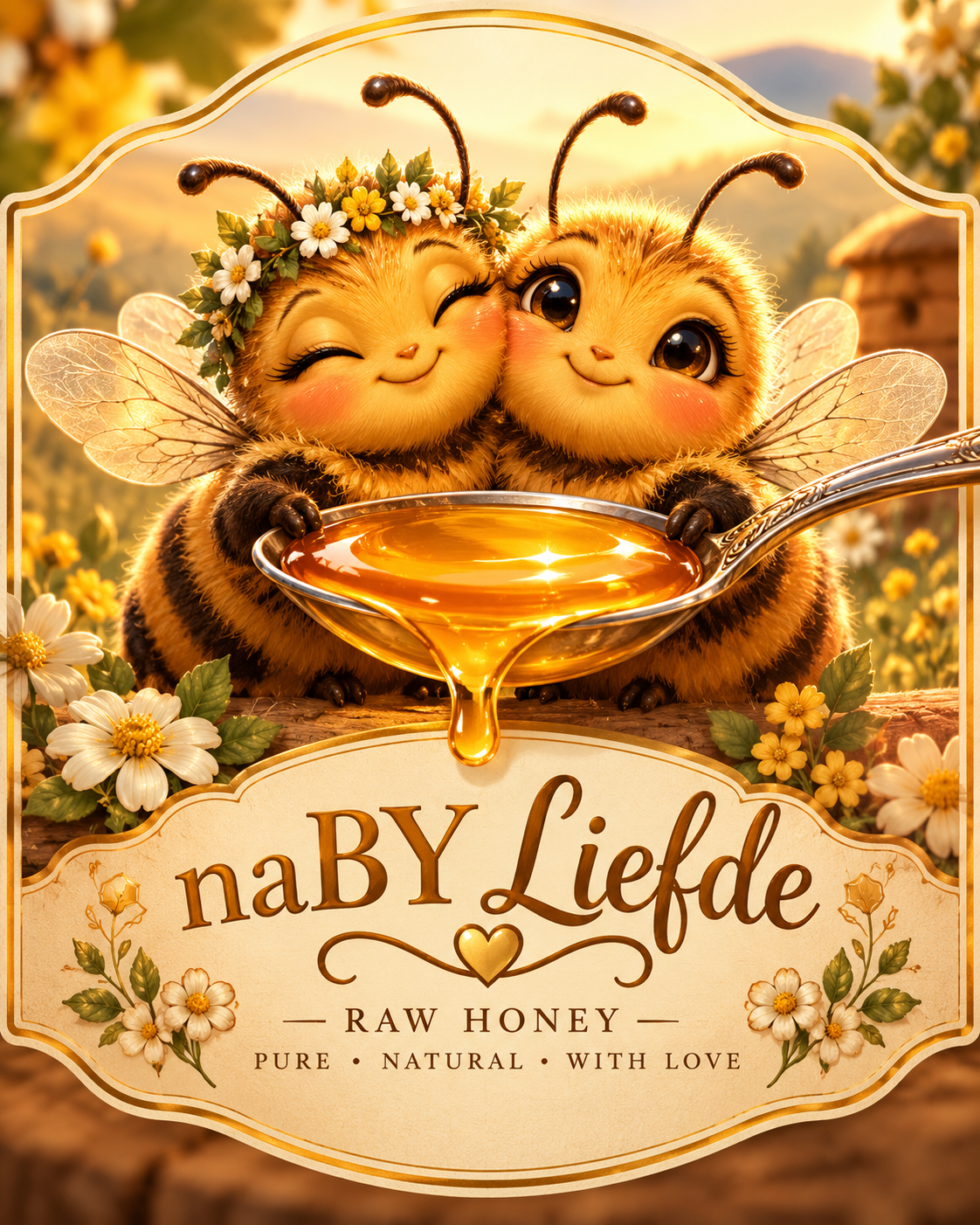
Two naBY Liefde bees presenting honey

A little South African honey story

Welcome to

Local honey. Beautiful blossoms. A work of love.

Raw nature. Thoughtful technology. Human connection.

Why the name?

Why “naBY Liefde”?

naBY Liefde is an Afrikaans wordplay. Naby means near or close by, while by means bee.

Hidden inside naBY is the tiny worker at the heart of our story.

Close by. Made possible by bees. Shared with love.

Meet the varieties

Our first four honey stories

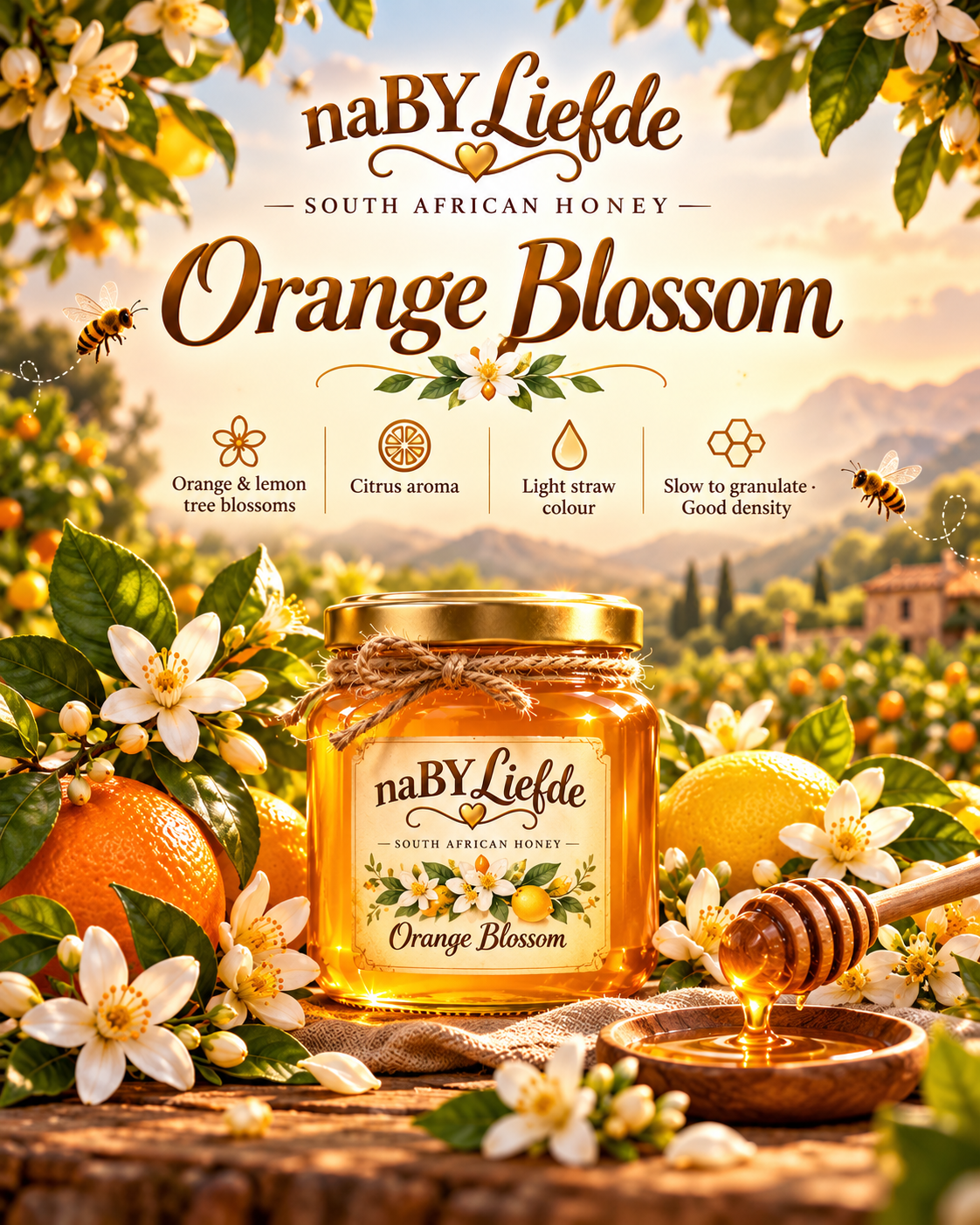
Orange Blossom honey

Honey variety

Orange Blossom

Obtained from orange and lemon tree flowers.

Obtained from Orange and Lemon Tree flowers. Production is usually good because the trees are irrigated. This honey has a citrus aroma, a light straw colour, granulates slowly, and has good density.

Light straw colour Citrus aroma Slow to granulate
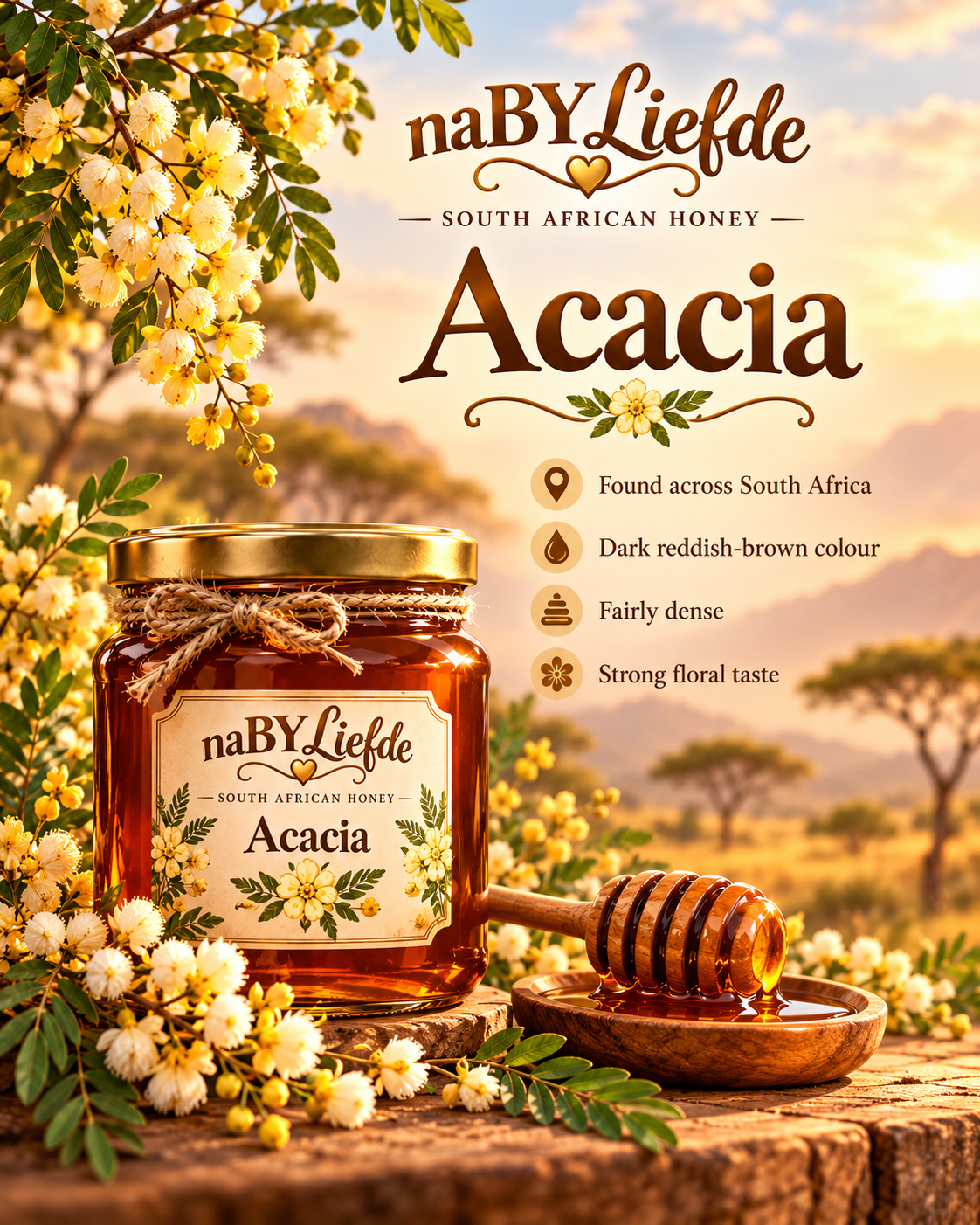
Acacia honey

Honey variety

Acacia

Trees found in most of South Africa.

Acacia trees are found in most of South Africa. Flowering is poor during dry summers. The honey is a dark reddish brown colour, fairly dense, and has a strong floral taste.

Dark reddish brown colour Floral and warm Fairly dense
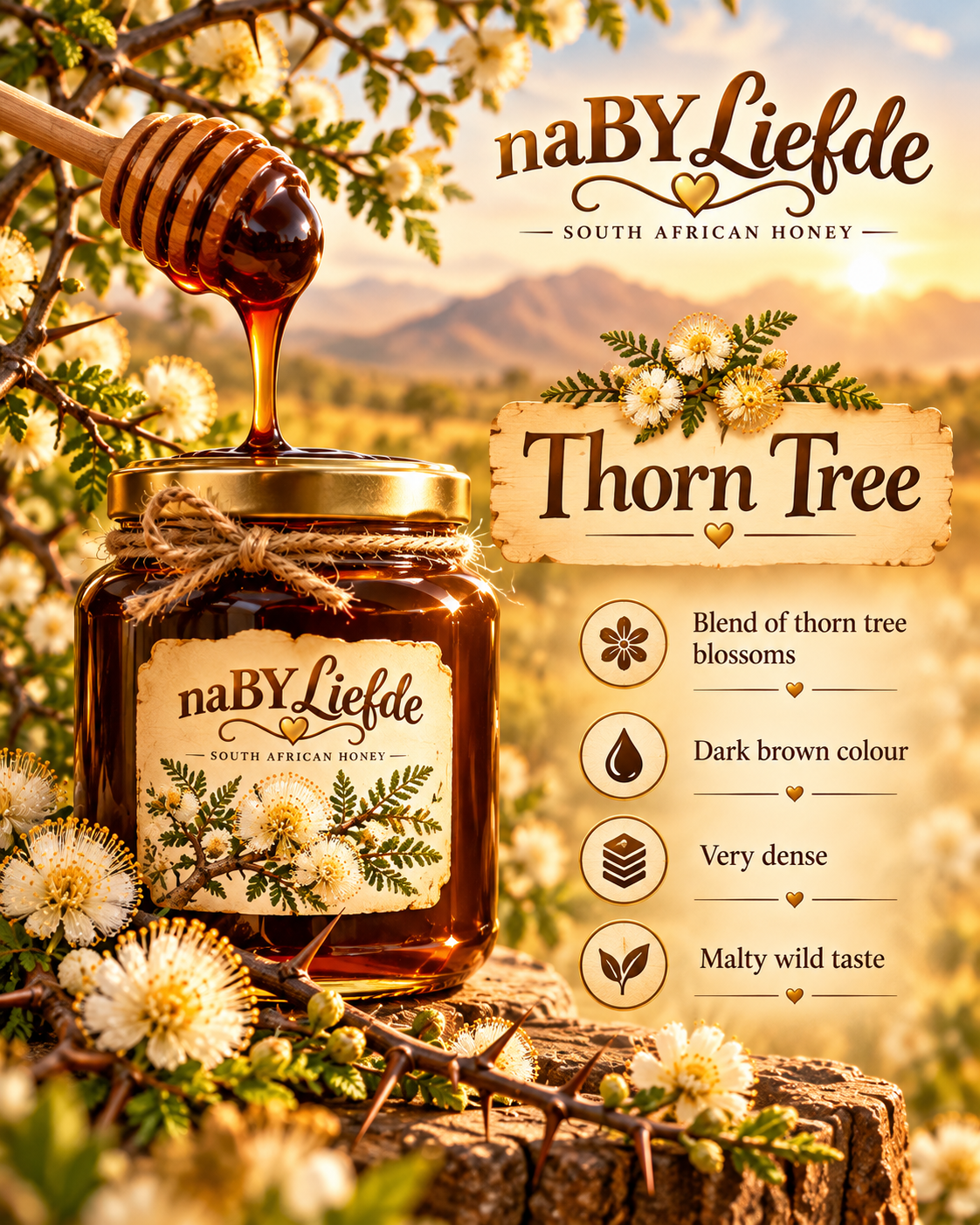
Thorn Tree honey

Honey variety

Thorn Tree

Natural blend of different thorn tree varieties flowering at the same time.

Similar to Acacia honey and may contain some Acacia. It is a natural blend of different varieties of Thorn Trees flowering simultaneously. Dark brown in colour, very dense, with a malty wild taste.

Dark brown colour Wild and warm Very dense
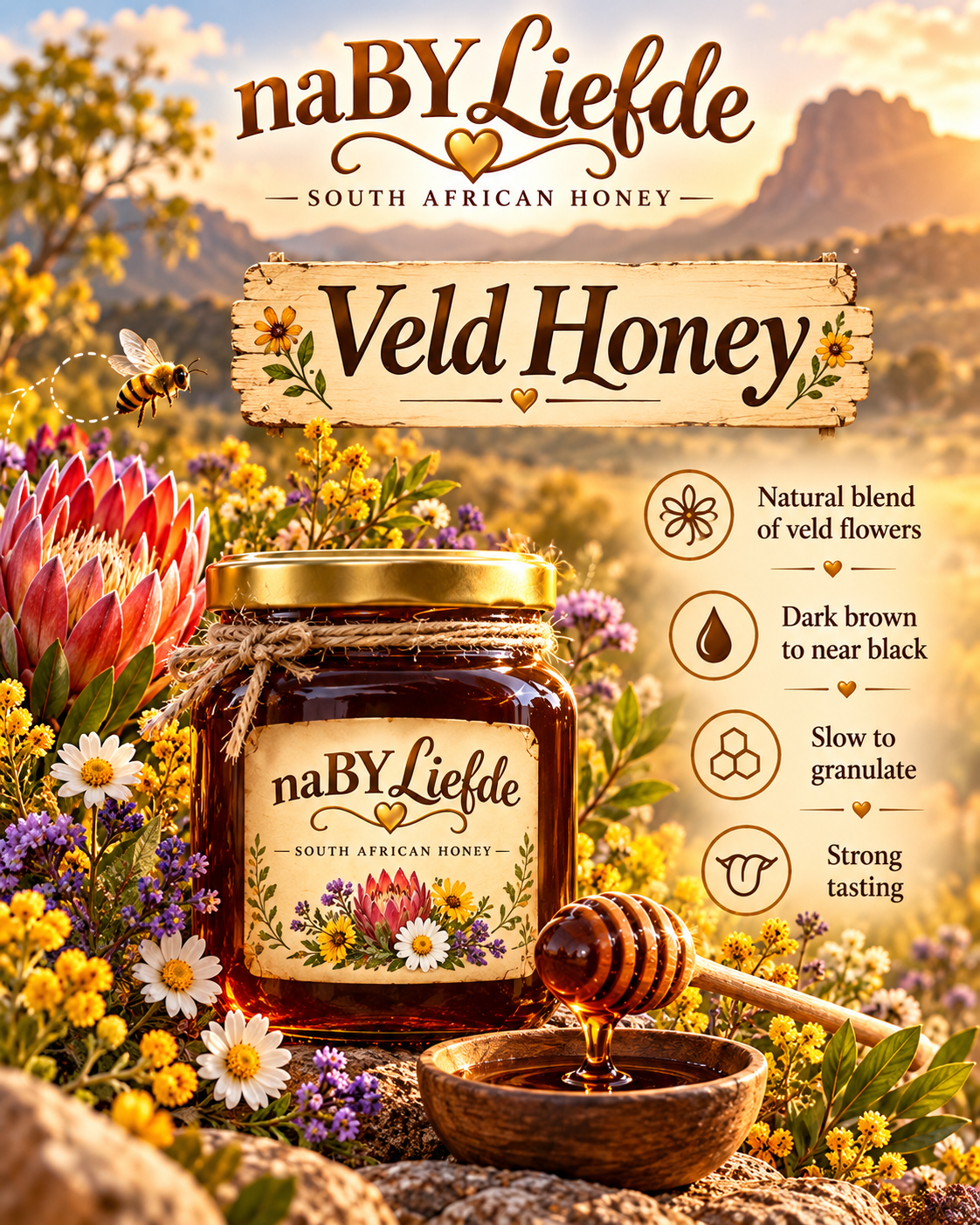
Veld honey

Honey variety

Veld

Natural blend of veld flowers from a wide range of habitats.

A natural blend of veld flowers occurring in a wide range of habitats. The flowering period may extend for several months during the summer season. This honey is a dark brown to near-black colour, granulates slowly, and is strong tasting.

Dark brown to near black Bold floral veld character Granulates slowly

From hive to jar

What our beekeeper tells us

Our honey is supplied by a South African beekeeper using local floral sources and migratory beekeeping, moving colonies to different forage as seasons change.

According to our supplier, the honey is non-irradiated and is removed from the hive frames using cold centrifugal extraction. It is then gravity filtered through a coarse filter to remove larger material while allowing naturally occurring pollen and propolis to remain.

Honey varies naturally from season to season. Colour, aroma and flavour can change with floral source, weather and harvest.

Our story

Honey was only the beginning

Honey was only the beginning of our treasure hunt for simple ingredients, good food and joyful discovery.

A story still growing

More will come, one small step at a time

We are adding honey stories, tasting notes, photographs and narrated recordings gradually.